
The Real Catch Me If You Can
the true story behind Frank Abagnale's con-man legend
The Real Catch Me If You Can part 1
Frank Abagnale... the con man whose story inspired Catch Me If You Can — claims he posed as a pilot, doctor, and lawyer before he was 21. Court and prison…
Frequently Asked
Is Catch Me If You Can based on a true story?
Only loosely. PRETEND's investigation, working with author Alan C. Logan, found that Frank Abagnale was incarcerated for most of the period he claims to have run his cons, and that his actual prison record contradicts most of the film and book's central claims.
How much money did Frank Abagnale actually steal?
Court and bank records reviewed by PRETEND show Abagnale cashed about $1,500 in bad checks against Pan Am's payroll account, not the $2.5 million he has publicly claimed.
Did Frank Abagnale really work for the FBI?
The FBI has not confirmed any formal employment. Retired agents who arrested him, including Al Brown, say they have no personal knowledge he was ever on the payroll, and the Bureau's press office says only that he has been an unpaid guest speaker.
How long was Frank Abagnale actually in prison?
Per court and prison records, about three months in France, two months in Sweden, and roughly two years in a U.S. federal penitentiary in Virginia, far short of the years-long, globe-trotting career he has described.
Did Frank Abagnale ever respond to these allegations?
PRETEND confronted Abagnale on camera, unannounced, with his prison records. He has said his longtime co-author, Stan Redding, was responsible for exaggerations in the bestselling autobiography.
People Named in This Investigation
The Subject and His Collaborators
Self-described reformed con man, bestselling author, and paid speaker who has said his longtime co-author, Stan Redding, was responsible for exaggerations in his autobiography. When confronted on camera with his prison records, he said: "I didn't write the book. I didn't make the movie."
PRETEND's chief collaborator on this series; his years of research into court, prison, and military records anchors most of the investigation's central claims.
Abagnale has publicly blamed Redding for exaggerations in the book that made Abagnale's story famous.
Say They Were Conned or Threatened
Her family took Abagnale in around 1969. Says he stole from her father's bookkeeping ledger, her mother's savings, and her brother's wallet, none of it ever repaid, and that he later showed up unannounced in cities on her flight schedule.
Says Abagnale reneged on a promised bonus and no-showed a major conference after students there exposed him as a fraud. When confronted by phone, Zinder says Abagnale told him, "it'll take $10,000 for me to solve my problem," then hung up, which Zinder took as a threat.
Per Alan Logan's research, Abagnale wrote them a bad check for roughly $2,000 in Swedish currency that was never repaid, despite a court order.
Says Abagnale forged him a fake ID and, after a fraud there, was court-ordered to repay Fuselier $125. Fuselier says he only ever received $100 back.
In 1976, court officers served her with papers at her workplace: she was sued for unpaid credit card charges and loans that she says Abagnale ran up under her name without her knowledge, after which he moved on and married Welbes.
Was Abagnale Really Recruited by the FBI?
Unlike his father's disputed FBI claims, Scott's own FBI career is real. He learned of his father's past around age 10, says his father has always been matter-of-fact about it privately, and that hearing him tell FBI-recruitment stories publicly "never stops being embarrassing."
"I've never met the guy... that damn Abagnale uses my name all over the place." Franck ran the Houston field office through the exact years Abagnale was living and working in the area, raising the question of how Abagnale could have been a Bureau asset there without his own division head knowing him.
Describes the arrest as "a routine white collar arrest." Says he has "no personal knowledge" that Abagnale was ever formally employed by, or taught ethics at, the FBI for decades, as Abagnale has claimed.
Says the idea that an FBI director would personally assign a civilian undercover missions, as Abagnale has claimed, is "bullshit."
Says Abagnale told him mid-flight that he was a "full-fledged" FBI special agent, a claim Winkler and a colleague immediately flagged to each other as false.
Family Whose Own Letters Contradict His Story
PRETEND reviewed letters from Abagnale's parents to the minister who took him in as a teenager. Both contradict the loving, gifted-son narrative in his public story.
In letters PRETEND reviewed, his mother wrote that he had "a compulsion to write checks and is unable to stop," and his father described him as having been "emotionally disturbed since the age of 10."
Reporters and Officials Who First Challenged the Story
Investigated Abagnale's claims after watching his Johnny Carson appearance; published a 1978 piece debunking his hospital residency and prison-escape stories.
Investigated Abagnale's claims for a Dec. 14, 1978 story. Found Pan Am's own security team put his actual haul at under $1,500, not the millions he's claimed, and found no record he ever passed the Louisiana bar or worked in the attorney general's office, as he has said.
“The Real Catch Me If You Can” is PRETEND’s eight-episode investigation into Frank Abagnale, whose claims of posing as an airline pilot, a doctor, and an attorney as a teenager in the 1960s became the basis for Steven Spielberg’s 2002 film Catch Me If You Can, starring Leonardo DiCaprio and Tom Hanks, and for Abagnale’s bestselling autobiography.
Working alongside independent researcher Alan C. Logan, author of The Greatest Hoax on Earth, PRETEND used court records, military files, and penitentiary records to test Abagnale’s account against the historical record. The investigation found that Abagnale was incarcerated for most of the period, roughly ages 16 to 21, during which he claims to have run his elaborate cons, and that his actual imprisonment was far shorter than the years he has described. The series also found no verified record supporting Abagnale’s claim of a decades-long working relationship with the FBI, including his account of teaching a course at the FBI Academy.
The series includes an unannounced, on-camera interview with Abagnale himself in Las Vegas, during which he was confronted with his own prison records. Abagnale has continued to build a career as a paid speaker on the strength of the story, and has said his longtime co-author, Stan Redding, was responsible for exaggerations in his autobiography. The investigation’s central claim, that most of the “Catch Me If You Can” story is fabricated, has been corroborated by outside reporting, including coverage in the New York Post.
Confronting Frank Abagnale in Las Vegas
After years of written requests for an interview were declined, PRETEND approached Abagnale in person, unannounced, at a Las Vegas speaking engagement, and asked him directly about the discrepancies between his public story and the prison, court, and military records PRETEND had reviewed.
Javier confronts Frank Abagnale in person, unannounced, in Las Vegas.
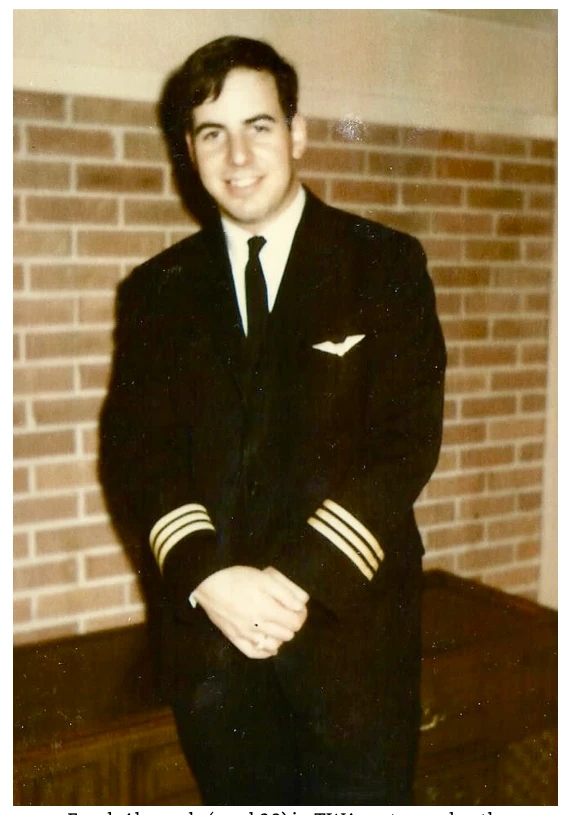
Early Arrests
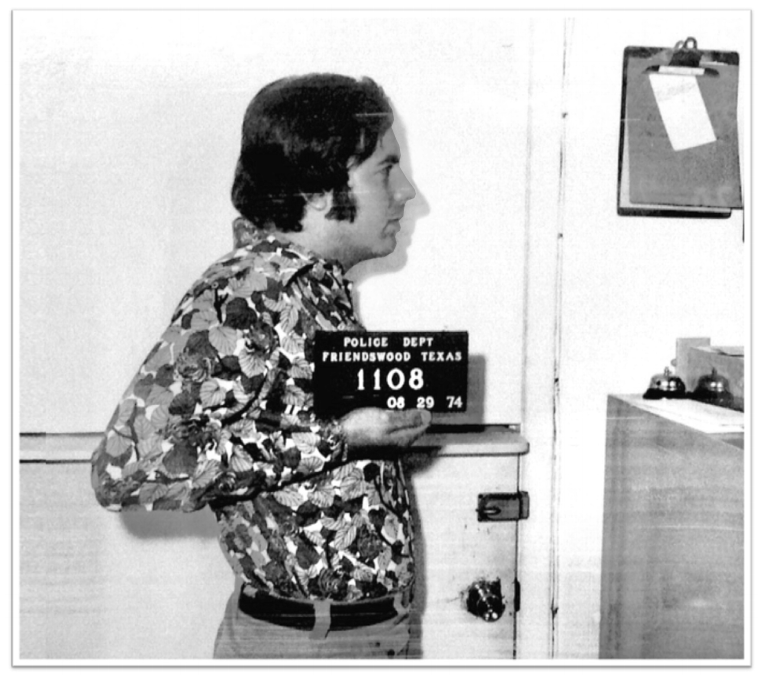
Some of Abagnale’s earliest brushes with police, well before the globe-trotting story he’d later tell Johnny Carson, are documented in period booking photos and newspaper clippings.
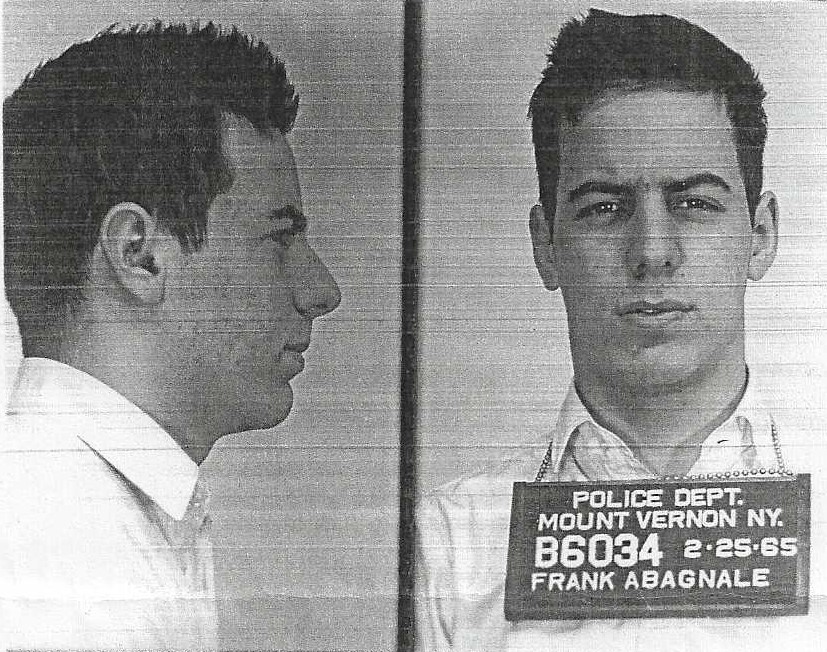
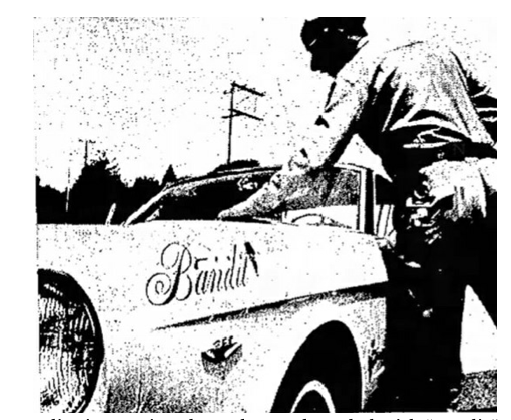
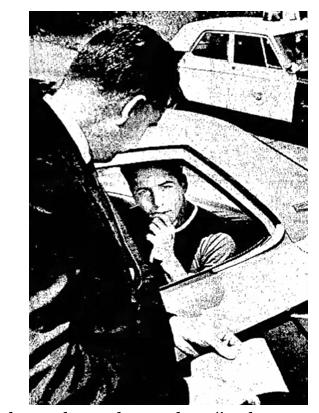
Camp Madison, 1974
After his release, Abagnale took a job at a Texas summer camp outside Houston while posing as a furloughed Delta pilot. Camp staff, including Morris Fuselier and camp founder Tom Madison, later said he forged IDs, stole camera equipment, and skimmed camp funds. A justice of the peace ordered him to repay Fuselier $125; Fuselier says he only ever received $100 of it back.
Was Abagnale Really Recruited by the FBI?
Beyond the prison record, one of the investigation’s central threads is Abagnale’s decades-long claim of a formal relationship with the FBI, including that he was personally recruited by an FBI director, taught ethics courses at the FBI Academy, and was sent on undercover assignments.
Retired FBI agent Al Brown, one of three agents who arrested Abagnale, describes the arrest itself as routine: “a routine white collar arrest.” Brown says he has no personal knowledge that Abagnale was ever formally employed by the Bureau or taught there for decades, as Abagnale has claimed, though he confirms Abagnale has appeared as a guest speaker. The FBI’s own press office would not confirm or deny a paid relationship when PRETEND asked directly, telling PRETEND’s fact-checker that Abagnale’s status “comes down to semantics.”
Robert Franck, who headed the FBI’s Houston Division from 1974 until his 1978 retirement, says he’s never met Abagnale, despite Abagnale invoking his name publicly. That’s a specific problem for Abagnale’s story: 1974 is the same year Abagnale was living and working in the Houston area, at the summer camp described above. If Abagnale really had been a Bureau asset operating in Houston at the time, it’s unclear why the man running the Houston field office wouldn’t have known him.
Retired agent and podcaster Jerri Williams says the idea that an FBI director would personally assign a civilian undercover missions, as Abagnale has claimed, is “bullshit.” Former NSA analyst Ira Winkler says Abagnale told him mid-flight that he was a “full-fledged” FBI special agent, a claim Winkler and a colleague immediately recognized as false.
Some of Abagnale’s own numbers don’t hold up either. Per Alan Logan’s research, Abagnale has told audiences the FBI accepts “one in 10,000” applicants; the Bureau has reported roughly 16,000 applicants and about 900 hires in a typical year, a rate nowhere close to one in 10,000. He has also said the Bureau’s official 100th-anniversary book, published in 2008, singled him out as the only person ever released from prison on a deal to work for the FBI; PRETEND has not found Abagnale mentioned in that book. He has separately claimed to have turned down pardons from three sitting presidents, a claim with no record at the Office of the Pardon Attorney.
PRETEND has not identified any FBI record confirming Abagnale’s claimed decades of formal employment.
Fact-Checking a Recent Talk
Much of what Abagnale still tells paying audiences today doesn’t line up with the record either, per Alan Logan’s research.
Abagnale often opens by telling crowds, “I don’t often talk about my life,” despite having given some version of the same paid talk for decades. He has told audiences a Catholic high school pulled him out of class at 16 to tell him his parents were divorcing; per Logan’s research, he doesn’t appear in that school’s yearbooks for the grades he claims to have attended, and public records show his father had already remarried and was living elsewhere months before Abagnale turned 16. He has said he didn’t see his parents again for seven years after running away; court records instead show his father brought him home after a 1965 arrest in California, and that Abagnale was paroled into his mother’s custody from a New York state prison in 1967, at 19. He has also said his mother never remarried; she in fact married a Westchester County dentist and stayed married to him for more than 20 years, until his death in 1994.
The story of his father’s death doesn’t hold up either. Abagnale has described learning of it while sitting in “a pitch black cell” in France. Per Logan’s research, his father died on March 11, 1972, while Abagnale was incarcerated at a federal prison in Petersburg, Virginia, not France, and no contemporary news coverage supports the dramatic public fall Abagnale has described.
His claim to have dated the Louisiana attorney general’s daughter, which got him hired into the attorney general’s office, doesn’t check out either. The attorney general’s only daughter has said she never met Abagnale and was already married during the period he describes. Then-First Assistant Attorney General Kenneth DeJean told the Louisiana Voice he tried to correct the record after one of Abagnale’s Tonight Show appearances, feeding a National Enquirer reporter a list of basic verification questions about the office; Abagnale, DeJean said, “didn’t answer a single question correctly.”
Abagnale has also told audiences he was “arrested only once” in his life. Public records reviewed by PRETEND show arrests in at least nine jurisdictions between 1965 and 1974, including Mount Vernon, Eureka, Tuckahoe, Boston, Baton Rouge, Montpellier, Cobb County, New York City, and Friendswood.
Even the famous escape scene has shifted with his audience. Abagnale now says he escaped a taxiing airliner through the kitchen galley, not the toilet depicted in the film, and has said Spielberg dramatized the toilet version. But in Abagnale’s own first press interview in 1977 and his 1978 press kit, both years before the autobiography or the film existed, he told the toilet version himself.
Per court and prison records reviewed by PRETEND, Frank Abagnale's actual confinement during the period covered by his famous story was far shorter than he has described: about three months in France, two months in Sweden, and roughly two years in a U.S. federal penitentiary in Virginia. He has not been criminally charged in connection with the claims examined in this series, and disputes that his account is fabricated.
Key Dates
Before the Legend
- 1964–1965
At 16, after his parents separate, Abagnale runs away from home to New York City and begins writing bad checks under an inflated age, according to his own retellings.
- 1965
Per court records, Abagnale steals a 1965 Ford Mustang and drives to Eureka, California, where FBI Special Agent Richard Miller recognizes the car; he's arrested within minutes.
- June 1965 – December 1968
Per an inmate record PRETEND reviewed, Abagnale was incarcerated for most of this period, contradicting the years-long, globe-trotting con career he has since described publicly.
The Baton Rouge Arrest and the Real Prison Record
- 1969
Posing as a pilot, Abagnale moves into the Baton Rouge home of flight attendant Paula Parks's family for about a month. He's arrested there after the family's minister calls the airline to verify his story.
- 1969–1971
Per court and prison records, Abagnale is held roughly three months in France and two months in Sweden on separate matters, then serves about two years in a U.S. federal penitentiary in Virginia, far short of the years-long sentence he has described.
After Prison
- 1974
Newly paroled, Abagnale takes a job at a Texas summer camp outside Houston while posing as a furloughed Delta pilot. Camp staff later say he forged IDs, stole camera equipment, and skimmed camp funds.
Building the Legend
- 1977–1978
Abagnale appears on the game show "To Tell the Truth" and later on "The Tonight Show" with Johnny Carson, distributing a self-produced press kit documenting his claimed exploits. Reporters Steven Hall and Ira Perry independently investigate and find his hospital, bar exam, and teaching claims unsupported.
- 1980
Abagnale publishes his autobiography, "Catch Me If You Can," co-written with Stan Redding; it becomes a bestseller.
The Legend Goes Global
- 2002
Steven Spielberg's film adaptation, starring Leonardo DiCaprio and Tom Hanks, cements the story internationally. Aeronautical engineers publicly question Abagnale's claimed escape through an airplane bathroom; he later shifts to a "kitchen galley" version of the story.
PRETEND's Investigation
- 2020s
Working with author Alan C. Logan, PRETEND reviews court, military, and penitentiary records and interviews Abagnale's alleged victims, associates, and family members, then confronts Abagnale on camera, unannounced, in Las Vegas.
Episodes in This Investigation
The Real Catch Me If You Can part 1
Frank Abagnale... the con man whose story inspired Catch Me If You Can — claims he posed as a pilot, doctor, and lawyer before he was 21. Court and prison…

The Real Catch Me If You Can part 2
Frank Abagnale claims he never stole money from the little guy—it was all victimless crimes. But that's not what I found. Hear the story of one family who says they…

The Real Catch Me If You Can part 3
Two reporters destroy Frank Abagnale's story. Yet nobody cared. _______ Listen to part 4 right now on Patreon: https://pretendradio.org/donate/ Special Thanks to: Fact-checking for this episode by Kate Gallagher. Special…
The Real Catch Me If You Can part 4
We've spent the last three episodes debunking the infamous Frank Abagnale myth. If he wasn't posing as a doctor, a lawyer, or a professor, then what the heck was Frank…

The Real Catch Me If You Can part 5
I confronted Frank Abagnale in Las Vegas, NV. He claims he posed as a pilot, a lawyer, a doctor, and a professor from the age of sixteen to twenty-one years…

The Real Catch Me If You Can part 6
Frank Abagnale's Catch Me If You Can is not just a hit movie, film and musical. It has become American lore. This series is not just a story about a…

The Real Catch Me If You Can part 7
What if I told you that Frank Abagnale wasn't the only con artist in his family? His older brother used multiple aliases, faked his career as a therapist, and was…

The Real Catch Me If You Can part 8
On September 12, 2022, Frank Abagnale was honored with a Heroes in Ethics award at Xavier University. An ethics award for a conman! Unlike the general public, who were spellbound…

The Real Catch Me If You Can part 9 (update)
Frank is Back! This update episode is loaded with new allegations and never-before-told capers. Like the time Frank Abagnale: Impersonated a cop with a paper badge and a toy gun.…